

KnowBe4 recommends that everyone use a password manager to create and use strong passwords as a part of their password policy:
https://info.knowbe4.com/wp-password-policy-should-be
LastPass, one of the world’s most popular password managers, recently had a bad data breach as revealed here:
https://blog.lastpass.com/2022/12/notice-of-recent-security-incident/
LastPass divulged that although user’s plaintext passwords were not accessed, what the hackers did get included the following information:
The hackers also got LastPass user’s encrypted passwords for each stored logon. The encryption protection is strong AS LONG AS the master password users used for LastPass was strong. If you’re interested in a more detailed discussion, go here:
https://www.linkedin.com/pulse/just-how-bad-recent-lastpass-compromise-roger-grimes
In summary, if your LastPass password was at least 12-characters long (the current LastPass default), contained some complexity, wasn’t an easy-to-guess password, and was not used on any other site or service, then you’re probably OK. If not, you need to immediately change all your passwords, both the LastPass master password and all the passwords you stored in LastPass.
Spear Phishing Bonanza
However, the plaintext information that was stolen (listed above) is incredibly useful to any hacker doing social engineering and phishing. It allows an attacker to specifically target (i.e., spear phish) a potential victim using information not known to the general public and other hackers.
For example, with a list of the web sites that someone logs onto, a phisher can craft specific phishing emails that pretend to be from that web site. It could include the user’s name, telephone number and mailing address. Each added detail adds to the veil of false legitimacy to a social engineering email. Each included detail increases the percentage of people who will become victims.
Knowing people’s phone numbers and what websites they belong to opens up an avenue for a fake tech support call. Mailing addresses can allow elaborate scams through postal mail. Here’s a brazen example of such a scam:
https://www.nasdaq.com/articles/inside-the-scam%3A-victims-of-ledger-hack-are-receiving-fake-hardware-wallets-2021-06-17
The sky is the limit on the types of spear phishing scams that can be created and delivered using the information that was stolen in the LastPass breach. Kudos to LastPass for making sure the most critical user information, the user’s passwords, were stored in an encrypted state.
But this breach, like all the others before it, are calling into question about what type of user information should or shouldn’t be considered “critical information” and always stored in an encrypted state. If the information can be used to identify or contact you, it should probably be encrypted by default.
LastPass users were relieved to learn that their stored passwords were not directly compromised, but what information was taken by the hackers is likely to have spear phishing repercussions for years to come.
Blog post with links:
https://blog.knowbe4.com/heads-up-lastpass-attack-could-supercharge-spear-phishing-attacks

AI-Powered Phishing and the Speed of Attack
Kasey Cromer, Netlok | June 16, 2026 Executive Summary In 2026, phishing is no longer a numbers game[...more]

Helpdesk is the Easiest Breach in Your Organization
Kasey Cromer, Netlok | June 9, 2026 Executive Summary In 2026, the most dangerous entry point in you[...more]

Leaner Teams, Smarter Logins: Why Eliminating Passwords Is the Right Move for 2026
Kasey Cromer, Netlok | May 27, 2026 Executive Summary In 2026, security leaders are being asked to d[...more]

When anyone can be faked: Photolok as the identity layer for the AI era
Kasey Cromer, Netlok | May 13, 2026 Executive summary As we move through 2026, the corporate world i[...more]
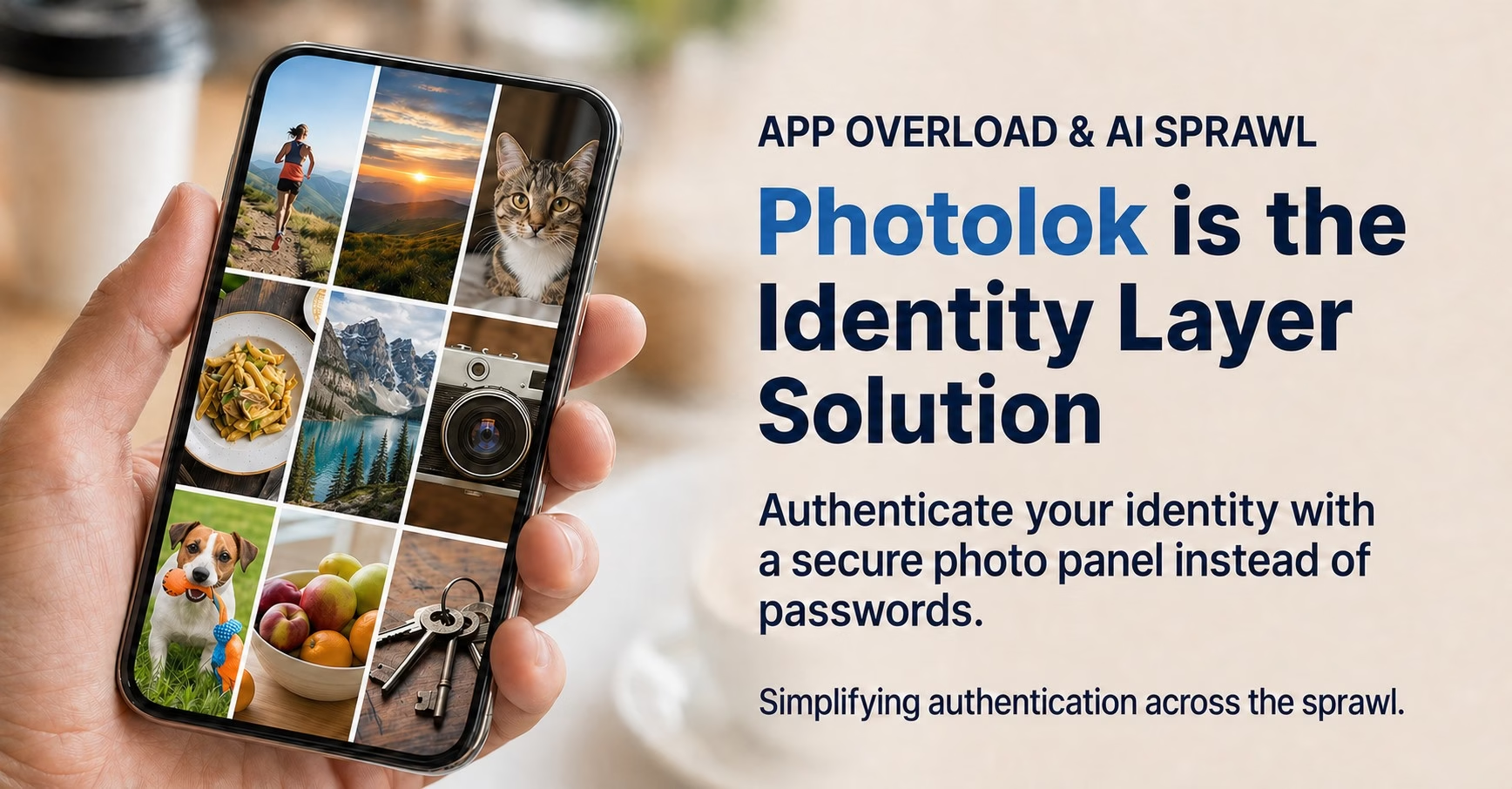
App Overload: Why SaaS apps and AI Sprawl Are Breaking Enterprise Security
Kasey Cromer, Netlok | April 29, 2026 Executive summary In 2026, most enterprises are running more a[...more]
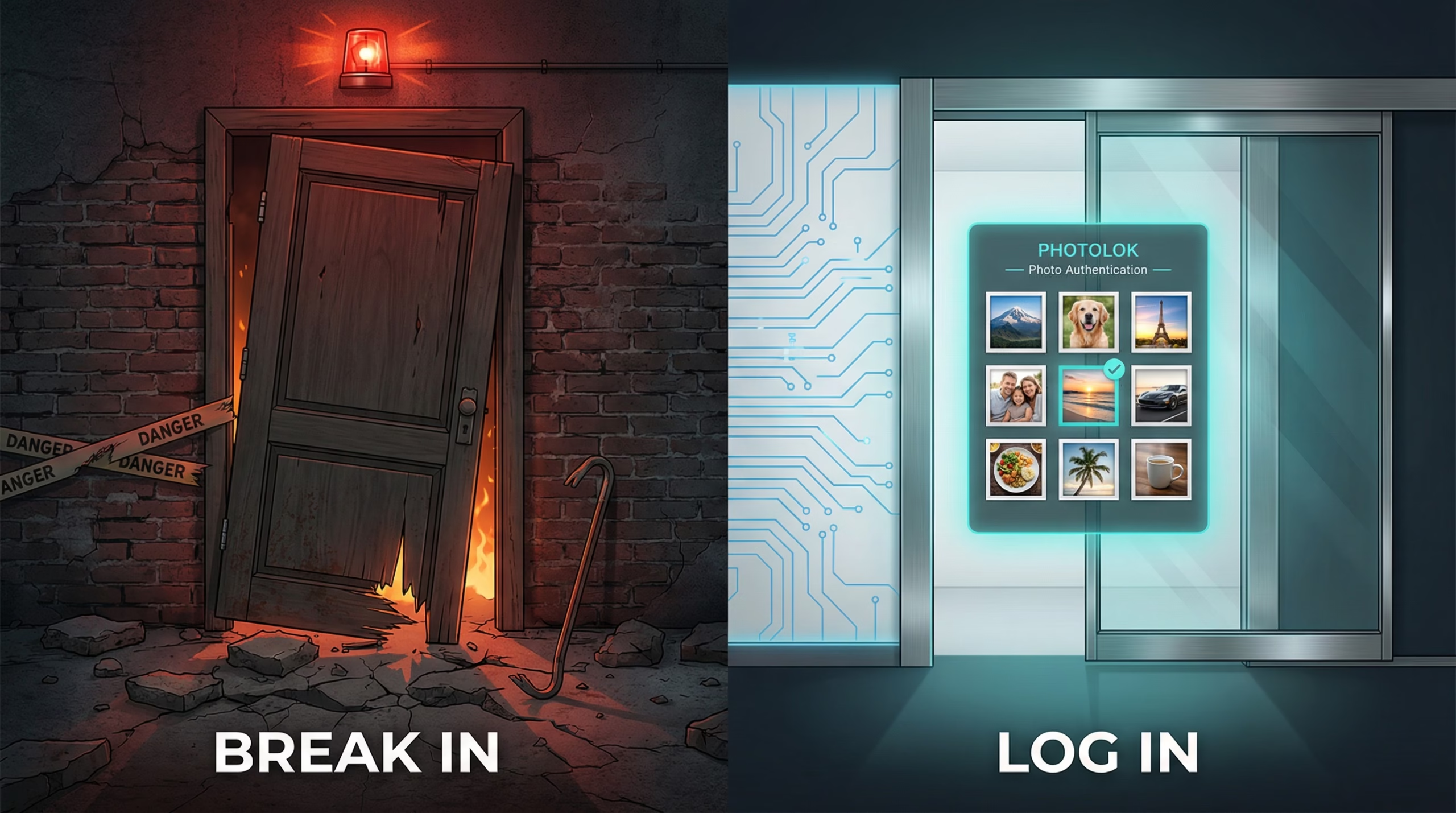
Identity Crisis: When Attackers Log In Instead of Break In
Kasey Cromer, Netlok | April 10, 2026 Executive Summary Geopolitical escalation reliably coincides w[...more]
Protecting the Person, Not Just the Account
Kasey Cromer, Netlok | March 31, 2026 Executive Summary Traditional authentication was designed to a[...more]

Why Passwords and Biometrics are Failing in 2026
Kasey Cromer, Netlok | March 18, 2026 Executive Summary The identity and authe[...more]

Pig Butchering Has Gone Big Time. Your Identity Layer Has to Catch Up.
Kasey Cromer, Netlok | February 28, 2026 Executive Summary “Pig butchering” refers[...more]