

In our digital age, data security has become absolutely essential. We have more online accounts than ever, and the ways hackers are attempting to access them are more sophisticated every day.
As the traditional model of written passwords is revealed to be vulnerable to hacks and breaches, the world is looking to alternatives that are safer and more reliable. That’s where biometrics come in — they use the things that are unique to each of us to verify our identities. This offers enhanced security and convenience over traditional passwords.
But not all biometric security measures are created equal. There are physical biometrics, of course, but there are also what’s known as behavioral biometrics. Each of these brings its own distinct methods, applications, and implications for security.
Understanding these differences is essential as privacy concerns rise alongside technological advances like AI. That’s why we’ve provided this primer on how physical and behavioral biometrics work, how they differ, and how our innovative approach to security at Netlok offers the perfect blend of benefits.
Physical biometrics authenticate individuals based on measurable physical traits. These traits are constant, stay the same over time, and are unique to each person. Common examples include fingerprint scanning, facial recognition, and iris or retinal scans.
The advantages of physical biometrics are significant. Physical traits like fingerprints and iris patterns don’t change over time, making them a stable basis for authentication. Meanwhile, many smartphones and devices now come built-in with fingerprint scanners or facial recognition. This makes it easy for users to access secure systems without passwords. Finally, physical traits are incredibly difficult to replicate, reducing the risk of unauthorized access.
That said, there are also some notable drawbacks to physical biometrics. If biometric data like fingerprints or facial templates are compromised in a breach, they obviously can’t be changed like a password could. Once stolen, this data can be used for identity theft and other malicious action. And even though many devices come with fingerprint scanners or facial recognition cameras, many don’t have this specialized hardware.
Unlike physical biometrics, behavioral biometrics focus on how you do things rather than what you are. This form of authentication relies on analyzing patterns in human behavior and interaction with devices.
Here are a few examples:
Advantages of behavioral biometrics include dynamic security, which means that because these behaviors evolve with the user they’re much harder for attackers to imitate. Behavioral authentication systems can also monitor users in real-time, identifying anomalies and flagging potential threats. And of course, this approach usually doesn’t require specialized hardware or sensors and can use regular accelerometers and touchscreens.
However, behavioral biometrics also require constant monitoring and data collection to work effectively. This can feel invasive to a lot of users. Environmental factors can also change behaviors, such as stress, injury, or other environmental conditions. This can lead to false positives or false negatives. Meanwhile, the sheer volume of data collected makes behavioral biometrics systems vulnerable to breaches.
Behavioral biometrics rely heavily on tracking and analyzing users’ daily activities. To provide accurate authentication, these systems monitor a wide range of behaviors, often without users being fully aware of the extent of data collection.
This raises significant privacy concerns:
So while behavioral biometrics offer advanced security features, their invasive nature makes them a controversial choice for a lot of everyday users.
As biometrics become more common in our everyday lives, keeping personal data private is going to become even more essential. Companies and regulators are stepping up with stricter rules to make sure user data is handled responsibly. For example, laws like the European Union’s GDPR and California’s CCPA are all about transparency. They require companies to be upfront about how they’re using biometric data and give users the option to opt out of things like invasive monitoring.
At the same time, some amazing innovations are shaking things up, like decentralized biometric storage. Instead of keeping all your biometric info on massive servers that could get hacked, decentralized models let users store their data locally, which makes breaches way less likely. Netlok’s Photolok is a great example of how we can move toward more secure and private ways of authentication without making users feel like they’re constantly being watched.
With these changes, the future of biometrics is really about finding the sweet spot between strong security and respecting privacy. By using smarter technologies and better practices, companies can create safer, more user-friendly ways to keep our online accounts secure.
As the debate around biometrics and privacy continues, Netlok provides an innovative alternative that sidesteps many of the concerns associated with both physical and behavioral biometrics. Netlok’s patented Photolok® technology offers a passwordless authentication solution that prioritizes privacy and security.
Instead of relying on traditional passwords or biometrics, Photolok allows users to authenticate their accounts using secure, encrypted photo identification. This approach offers enhanced privacy, a much more user-friendly experience, greater resilience to hacks and breaches, and no continuous, invasive monitoring.
By replacing passwords with encrypted photo authentication, we eliminate vulnerabilities while giving you full control over your data. Want to learn more? Find out how Photolok works or request a demo today.
Critical Infrastructure Isn’t Breached. It’s Logged Into.
Kasey Cromer, Netlok | July 15, 2026 Executive Summary In 2026, the most consequential cyberattac[...more]
AI-Powered Phishing and the Speed of Attack
Kasey Cromer, Netlok | June 16, 2026 Executive Summary In 2026, phishing is no longer a numbers game[...more]

Helpdesk is the Easiest Breach in Your Organization
Kasey Cromer, Netlok | June 9, 2026 Executive Summary In 2026, the most dangerous entry point in you[...more]
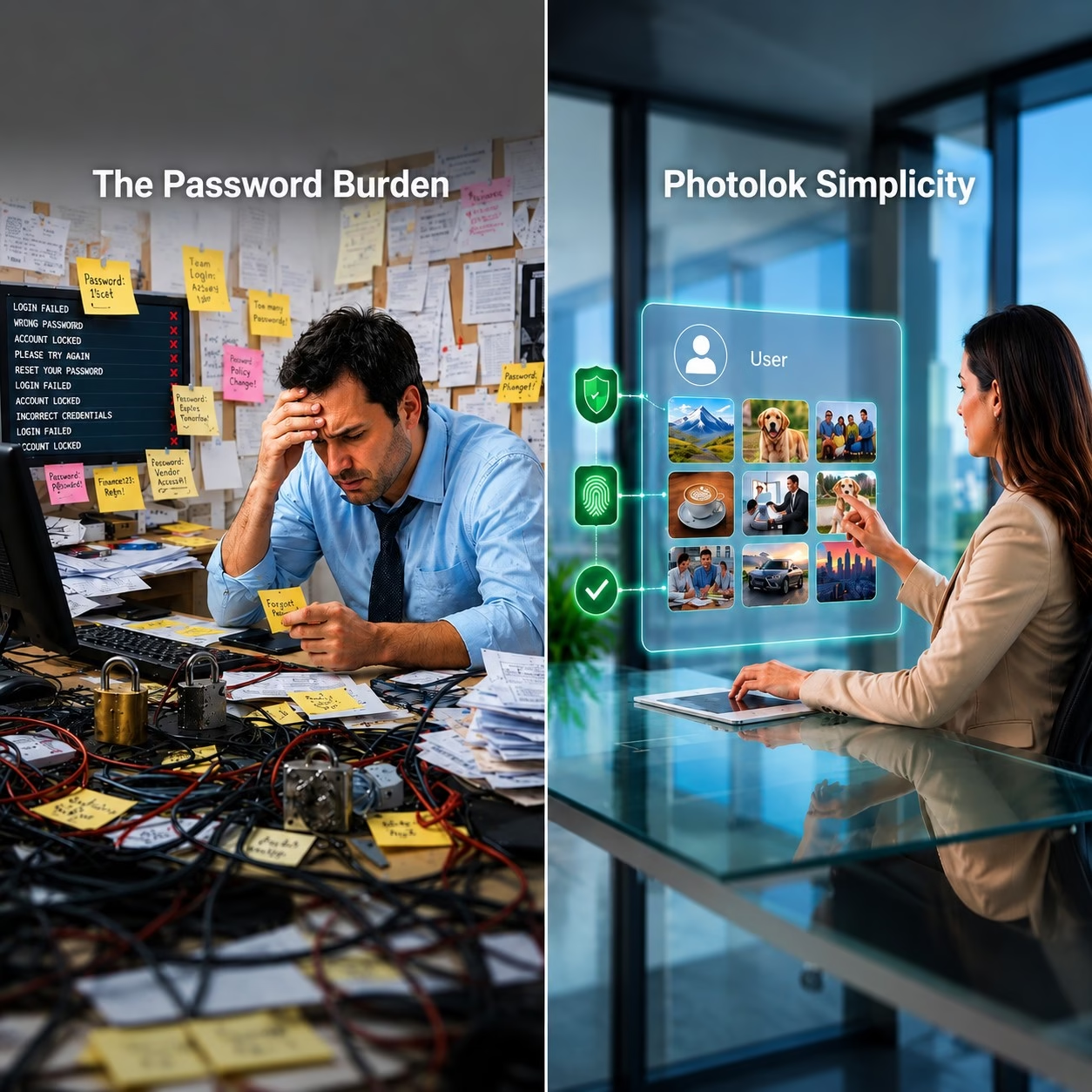
Leaner Teams, Smarter Logins: Why Eliminating Passwords Is the Right Move for 2026
Kasey Cromer, Netlok | May 27, 2026 Executive Summary In 2026, security leaders are being asked to d[...more]

When anyone can be faked: Photolok as the identity layer for the AI era
Kasey Cromer, Netlok | May 13, 2026 Executive summary As we move through 2026, the corporate world i[...more]
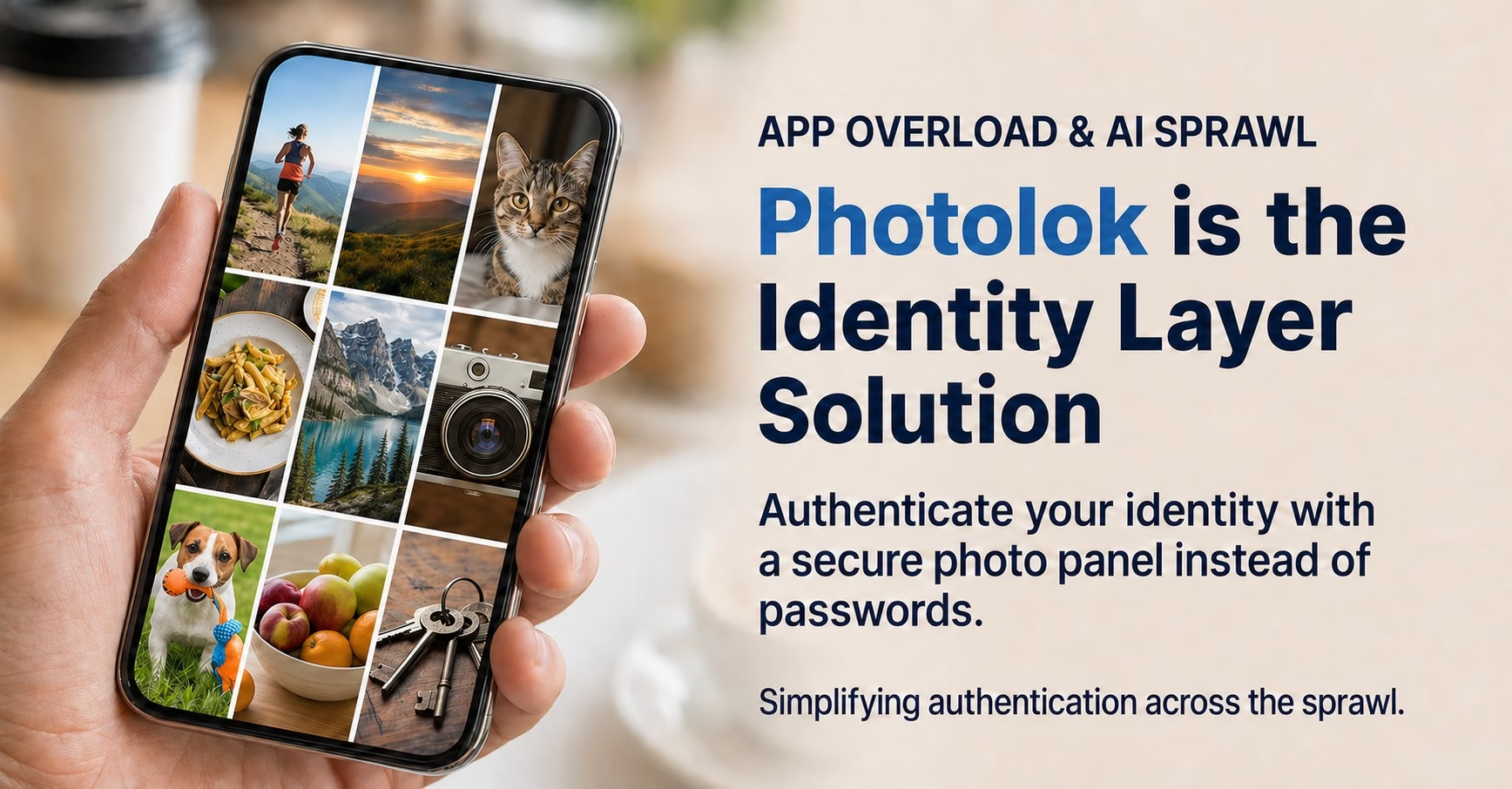
App Overload: Why SaaS apps and AI Sprawl Are Breaking Enterprise Security
Kasey Cromer, Netlok | April 29, 2026 Executive summary In 2026, most enterprises are running more a[...more]
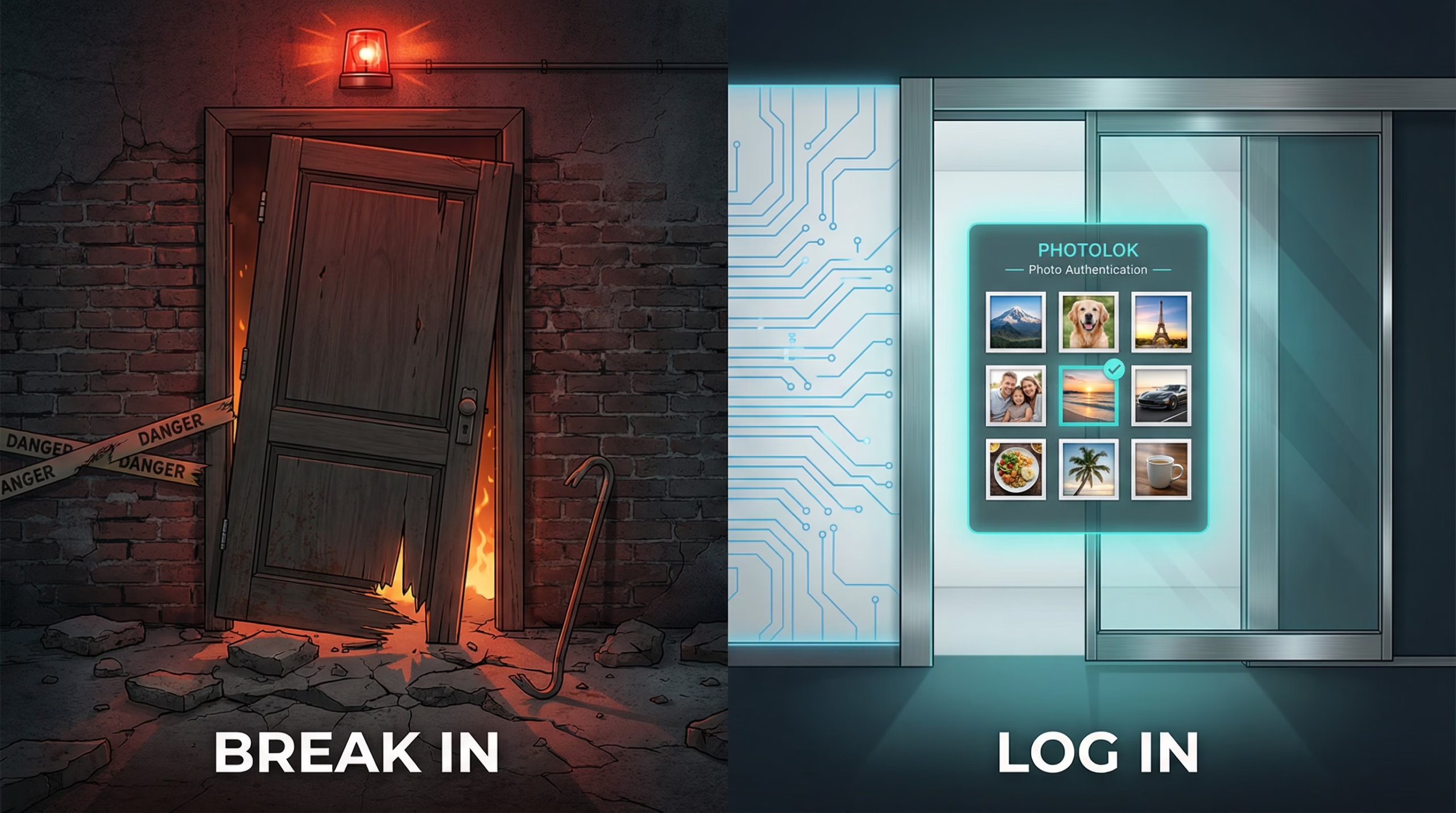
Identity Crisis: When Attackers Log In Instead of Break In
Kasey Cromer, Netlok | April 10, 2026 Executive Summary Geopolitical escalation reliably coincides w[...more]

Protecting the Person, Not Just the Account
Kasey Cromer, Netlok | March 31, 2026 Executive Summary Traditional authentication was designed to a[...more]
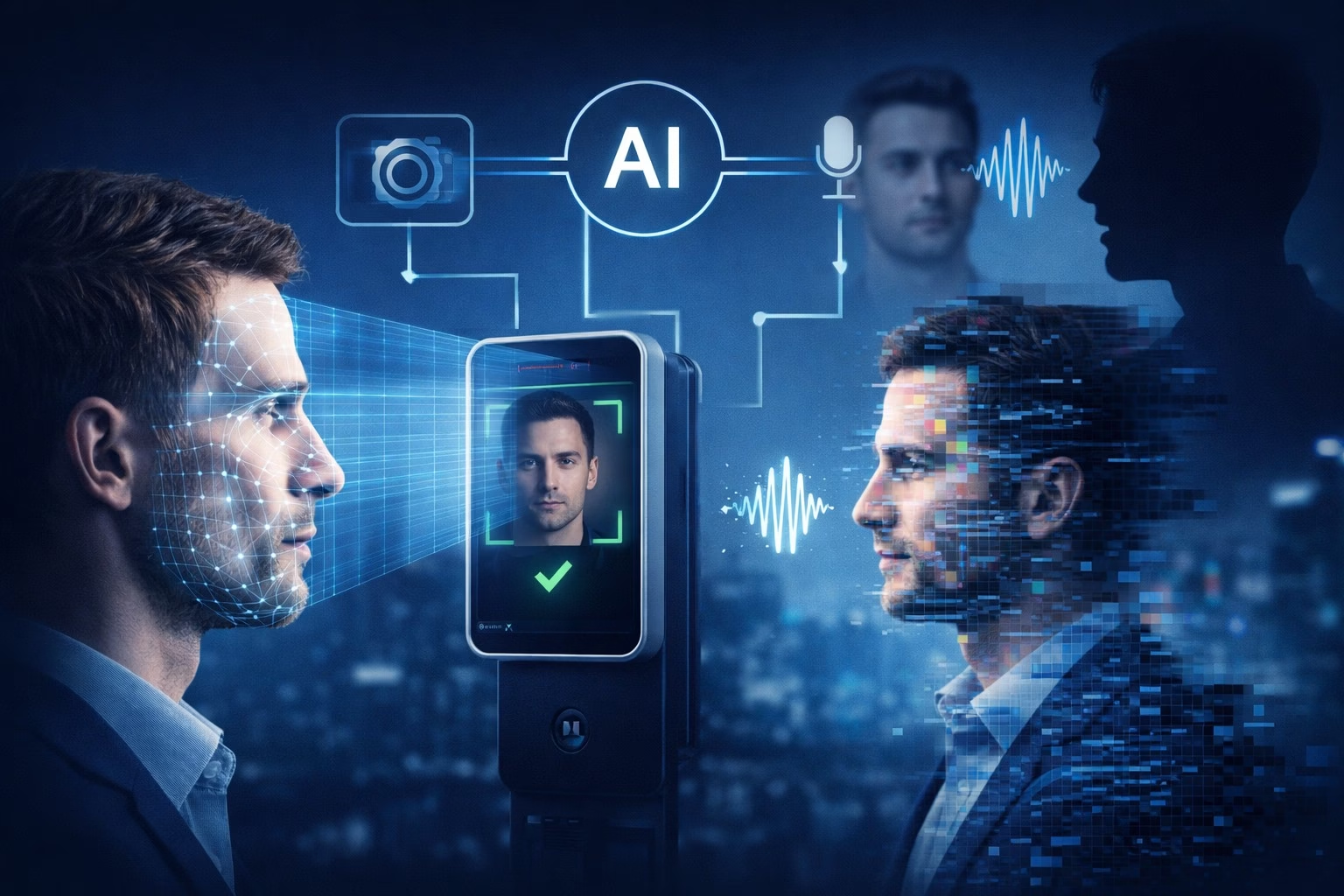
Why Passwords and Biometrics are Failing in 2026
Kasey Cromer, Netlok | March 18, 2026 Executive Summary The identity and authe[...more]